
Prefer audio? Listen to the recorded version below.
I wrote in my recent extensive geopolitical analysis, “Peace & Perversion” (23 February, Jupiter Insights) that much Trumpian policy is delivered by social media soundbite. One such example was, “‘We will rain hell’ (policy against Iran and its proxies).” Less than two weeks later, together with Israel, Donald Trump has certainly done that, literally to devastating effect.
I then went on to say, “Applying strong man tactics, Trump the perversely self-proclaimed ‘non-interventionist President of Peace’ is content to dispense his own unique brand of pax humana wherever he sees the need; but the symbols, the traditional white doves, the olive branches, handshakes of goodwill, the kumbaya, all are redundant relics. They are replaced with high-tech hardware delivered in a mailed fist: MOPs, Tomahawk cruise missiles, nuclear-powered aircraft carriers, Navy SEALs and military Delta Force kidnap/hit squads.” That same non-interventionist President of Peace has unequivocally intervened in Iran in the most violent way possible with all the conventional weapons at his disposal launched by that mailed fist.
Identified from Trump’s National Security Strategy of the United Sates of America (published by the White House, November 2025), the following was also highlighted in “Peace & Perversion”: “Given the direct US interventions in Nigeria, Venezuela and Iran, and the threatened ones directly or obliquely targeted at Greenland, Cuba, Mexico, Colombia, Panama, Canada and others, Trump’s principles of ‘Predisposition to Non-Intervention’, the ‘Primacy of Nations’ and ‘Sovereignty and Respect’ are obvious inconsistencies. Trump presumes a self-determined legitimacy to deviate: ‘For a country whose interests are as numerous and diverse as ours, rigid adherence to non-interventionism is not possible. Yet this predisposition should set a high bar for what constitutes a justified intervention’. It is Trump who sets the height of the bar.” (my emphatic italics).
Ask four different senior members of the Trump administration what justified the intervention and even today, Trump, his Secretary of State Marco Rubio, Vice President JD Vance and Secretary of State for War Pete Hegseth will between them give four different answers. At least one of those reasons, the removal of the nuclear threat, requires extra scrutiny thanks to Trump’s own words in the introductory “My Fellow Americans” letter in his National Security Strategy, which explicitly recalled that “In Operation Midnight Hammer (i.e. the 12-Day War in June 2025), we obliterated Iran’s nuclear enrichment capacity.” As for the height of the intervention bar, it certainly did not go as high as consulting with allies other than Israel, or Congress or the United Nations; the bar’s height was simply as high as Trump’s patience was low.
A Region Aflame and in Turmoil
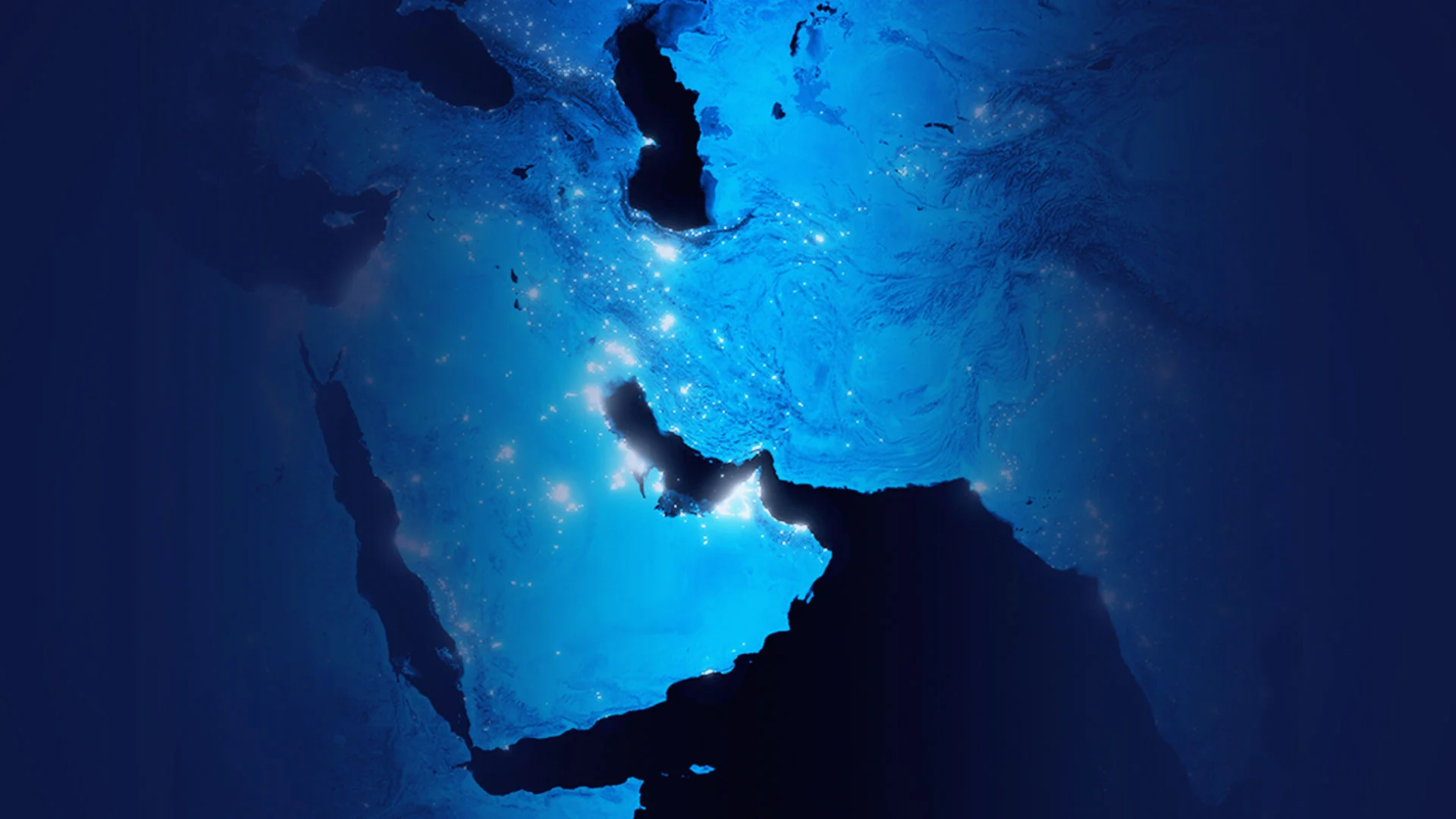
Only six days after unleashing the deluge from hell on Iran, the result today is an almost unbroken zone of conflict engulfing the Eurasian landmass from the northern-most border of Ukraine all the way south to the Persian Gulf and the Indian Ocean, and from the eastern Mediterranean as far east as Sri Lanka and Pakistan (where the Taliban government in Afghanistan has coincidentally but simultaneously traded bombs and bullets with its neighbour in Lahore). That the conflicts in different ways and to varying extents and levels of interest as combatants or proxies have drawn in NATO, China, India, North Korea and others, this is truly a global confluence of events even if most are determined not to label it World War Three (which common sense says is what it is).
Legality and Morality
The arguments will persist about the moral rights and wrongs, the legitimacy and the illegality of Donald Trump’s actions when managing the threat posed by such a rogue nation as Iran with the sponsorship of international terrorism at the heart of its strategy. Trump has the support of Congress, at least to the extent that amid Republican solidarity, Democrats failed in their attempt to bring his actions to a halt under the War Powers Act while challenging the legality of Trump’s attack. Realpolitik has left the niceties and tidiness of international law and its upholders far behind.
The country with a strong moral case for what the astute satirical political observer Armando Ianucci accurately described as “pretaliation to the taliation rather than hanging around to do retaliation”, is Israel: ever since the Revolutionary Islamic Republic of Iran declared that its aim was the eradication of the State of Israel and the extirpation of the Jewish people, Israel has had the right of pre-emptive self-defence on its side. As Yair Lapid, the Leader of the Opposition in the Knesset and usually a strong critic of Prime Minister Netanyahu said this week, “Israel has been facing an existential threat. Over our history, Israel has learned not to wait meekly for bad things to happen and to accept them. You go and deal with it”. Israel was not prepared submissively to await its fate were Iran to have both a current ballistic and future nuclear capability with which to prosecute Tehran’s letters of fire and sword. On October 7 2023, if through Hamas Iran sowed the wind perpetrating its atrocities on the Israeli Kibbutzim, it is now reaping the whirlwind of its own making.
Allied Disunity
Far from speaking with one voice, America’s NATO ‘allies’ are as deeply divided on this new dimension of Trumpian “AMERICA FIRST” ideology as they were earlier this year about how to deal with Trump’s corrosive attitude towards themselves over defence spending and the sovereignty of Greenland. President Macron and the Spain’s Pedro Sanchez have declared Trump’s actions immoral and illegal. Canada’s Mark Carney has performed a swift about turn, rapidly shifting ground from initially backing Trump’s strategy, now to his regarding America and Israel’s actions as illegal. With his biggest car export market to defend and his industrial base almost entirely reliant for energy on shipped US Liquid Natural Gas after losing all his piped gas supplies from Russia, Germany’s Chancellor Merz knows which side his bread is buttered: already in the “keep Donald sweet camp” on European defence and security, his pragmatic stance is “now is not the time to be lecturing the Americans about the legality of attacking Iran”.
Our own Keir Starmer, caught like a rabbit in the headlights and despite dodging randomly hither and thither for the nearest legal cover, has managed to achieve the worst of all worlds: he has been very publicly run over by Trump (“we’re very disappointed with Keir” and “the guy’s a loser”); he has been outflanked by Germany in the Special Relationship stakes with the US; and lead-footed, he has been humiliated by France militarily. President Macron has quickly dispatched a naval and air task force headed by the nuclear-powered carrier Charles de Gaulle already sailing from Toulon to the defence of Cyprus and the UK air base at Akrotiri, while the Royal Navy takes at least a week to muster a crew, stores and ammunition for a single destroyer which will not arrive on station until mid/late March at the earliest. The UK’s own carriers are out of commission, in dock being serviced. However much government ministers protest that the RAF and other defensive measures are in the region “in force”, the optics of too-little-too-late have created a strong impression of an indecisive cabinet and the MoD being asleep at the wheel operationally.
“No nation building!”; the US Strategic Sin
As for “the plan”, it is becoming clear that even if not overtly engaged in regime change (“we don’t care who runs Iran after”) the US and Israel are determined to dismantle and destroy the apparatus of state in Iran: the clerical leadership; the theocratic administration; the praetorian Iranian Revolutionary Guard; the military and police forces. At the time of writing, Trump has delivered a stark choice: to all of those just mentioned, “surrender or face certain death”; to the wider population, “rise up and take back control of your country”. He also demands a say as to who will run Iran. A new phase of increased violence against Iran is being unleashed.
The history of the post-Cold War era says that one of the besetting sins of US foreign policy with military intervention is a complete lack of Phase Four Post-Operational Planning: essentially, having bombed the living daylights out of its subject and destroyed physical, political, economic and societal infrastructure, it fails to pick up the pieces. Iraq, Libya, Syria and Afghanistan are the concrete evidence of the physical, political and economic rubble left because of US military attention, often with allies but in every case where America has been in the driving seat about what happens after.
Reinforcing that America appears to have learned nothing, in the case of Iran Hegseth has made it very clear that there will “be no nation building” by the US. The explicit responsibility is that of the Iranians themselves. Anecdotally, a plan has been mooted that the CIA intends to rearm Kurdish militias who will lead an uprising. The US used the Kurds against the Assad regime in Syria and the wider fight against the ISIL Caliphate. It then dropped them like hot potatoes and left them to fend for themselves having outlived their usefulness. One would imagine that in return for being (ab)used again, they will almost certainly demand terms including a new homeland and the restoration of Kurdistan spanning the Levant and Mesopotamia. A Kurdish-led, US sponsored military uprising in Iran will be setting major alarm bells ringing in Ankara (nearly a fifth of the population of Turkey is ethnic Kurd), Beirut, Damascus, Amman and Baghdad, as well as Tehran.
Iran itself is a quilt of ethnic and religious factions: Persians, Arabs, Kurds, Azeris, Baluchis and others. Would they unite not only against the Mullah/IRG regime, but remain united to form a stable government? Or would they splinter with the likelihood of civil war? To what extent would each be susceptible to outside influences with an interest in exerting control? As well as the US and Israel, these would include China, Pakistan, Saudi and the other Gulf States. We must also consider non-state organisations becoming involved including Al Qaeda, ISIL and the Taliban. What happens if the current regime survives in a new, even more repressive form with the IRG calling the shots?
If the regime falls and even if America were to stay involved, it cannot run a country four times the size of Germany and with a population of over 90 million from two aircraft carriers, one floating in the Persian Gulf and the other nearly a thousand miles away in the Mediterranean, but with no presence on the ground. Installing a new government in such circumstances needs the back-up of forces of occupation and a huge reconstruction budget; unlike in Libya and Iraq, it means knowing who you’re backing and having the physical presence to support them; it means understanding what internal opposition there is likely to be and how to deal with it. The US has enviable firepower and military muscle but winning “hearts and minds” is simply absent from the strategic playbook. There is clearly neither political will in Washington nor public support across the US for such an approach. Having unleashed the furies, America must take the consequences of its actions in its post-conflict phase, which may include civil war in Iran, greater destabilisation across the region and terrorist attacks on US interests both abroad and at home.
China is surely biding its time: Iran is the source of around 12% of China’s oil needs (add to that a further 25-30% from Russia and Venezuela, the latter’s oil production now under US control) but that can be replaced over time. More fundamentally, thanks to the location of Iran at the fulcrum of the Eurasian and Arabian landmasses and spanning and blocking the entire area between the Caspian Sea and the Gulf/Indian Ocean, China’s strategic One Belt One Road and maritime String of Pearls projects for global domination by the middle of this century risk becoming disjointed and dislocated, the New Sino Silk Road reduced to little more than a pan-Asian cul-de-sac. China needs Iran almost as much as Iran needs China.
There are consequences for Russia too: Putin risks losing not only a key ally but an important source of military drones supplied by Iran for use in Ukraine. The squeeze to the Russian economy and its financial reserves from sanctions may be relieved by the jump in the oil price but that benefit may prove temporary. “Fixed” in Ukraine, as the UK’s Chief of the Defence Staff described it, how does Russia respond to the loss of Iranian support?
Political vacuums seldom last long: the strain of filling them can be considerable.
Politics; Economics; Investments: Consequences and Perspectives
Trump faces the mid-term elections in exactly 8 months. The Republicans are way behind in the polls and in danger of losing both the House and the Senate. Trump promised “no more wars” and to reverse the cost of living crisis. He faces certain defeat at the hands of the electorate if in November the cost of living is rising thanks to his twin policies of trade tariffs pushing up the cost of imported goods and if energy prices are elevated thanks to a war that he started. He needs a decisive win. In his ideal world, he will deliver a quick military victory in Iran and see a new US-friendly regime installed in Tehran which will allow the removal of sanctions. In Ukraine, he wants a peace deal by June, again to demonstrate his leadership but more cynically to allow sanctions to be lifted against Russia. In both cases, with the promise of oil flowing freely from both sources, instead of a crude price today in the mid-80s dollars per barrel, if Brent were closer to $50, that would give him a chance. Both are possible if seemingly improbable today.
The general economic outlook depends on the duration of the conflict. The principal consequences are to the supply side of the economy: the disruption to energy supplies and the frictional costs and dislocation of global logistics chains as shipping is re-routed to avoid the Gulf and the Red Sea. The longer the duration, higher energy and freight costs will begin to have a general inflationary effect. Sovereign bond yields have already risen sharply as markets price in the risk of anticipated central bank interest rate cuts by the Federal Reserve and the Bank of England being postponed. Before the attacks, markets assessed an 80% probability of a quarter point cut in UK interest rates in March; that confidence has all but evaporated. On February 27, the UK 10-year Gilt yield was 4.2%; a week later it is 4.5%. Step back and consider the huge shift in the pricing of risk in the past six years: at the peak period of the pandemic crisis in mid-2020 and before President Putin began manipulating the price of gas as a prelude to his invasion of Ukraine, UK government borrowing costs briefly reached a low point of 0.1%.
If there has been a perceptible reaction to government borrowing costs, under the circumstances other markets have taken events in their stride. Equity market reactions have been relatively mild. Investors have so far been indecisive as to whether buying gold or dollars as a store of value is the better bet.
There are other direct financial costs aside from a burgeoning interest bill. With unfortunate timing, the UK energy regulator OFGEM announced a week before the US/Israeli attack that effective from 1st April, the energy price cap for consumers will reduce by 7%; between then and now, oil prices have risen 23% but much more importantly the price of wholesale gas has jumped by two thirds; unless a force majeure is invoked or the price rapidly falls, the cash difference is underwritten by the Treasury. Since the Price Cap regime was introduced by Liz Truss in October 2022, OBR figures suggest the UK government has already spent close to £70 billion, more than a year’s defence expenditure, “fixing” the price of electricity and gas.
Dynamic and fluid
These are febrile and extraordinary times, especially for generations who have neither seen nor experienced extensive war and conflict in their lifetimes. As I have said on many occasions, the geopolitical and geostrategic tectonic plates are always shifting; sometimes the result is a geopolitical earthquake as the tensions are suddenly released. Trump has undoubtedly catalysed the acceleration of the shift even if he is not directly the cause of it. Where he chooses to focus his energies in future, only he knows (Cuba seems to be next in line for his special treatment).
But as this colossal strategic clash of the titans for global domination progresses principally between the US and China, what Mark Carney calls the “Middle Powers” are collateral damage. That includes the UK. All are struggling to establish an anchor point and a sense of direction and purpose in a maelstrom of turbulence. That evolution will have many twists and turns yet. Self-evidently, the Middle Powers are not in control of events.


The value of active minds: independent thinking
A key feature of Jupiter’s investment approach is that we eschew the adoption of a house view, instead preferring to allow our specialist fund managers to formulate their own opinions on their asset class. As a result, it should be noted that any views expressed – including on matters relating to environmental, social and governance considerations – are those of the author(s), and may differ from views held by other Jupiter investment professionals.
Fund specific risks
The NURS Key Investor Information Document, Supplementary Information Document and Scheme Particulars are available from Jupiter on request. The Jupiter Merlin Conservative Portfolio can invest more than 35% of its value in securities issued or guaranteed by an EEA state. The Jupiter Merlin Income, Jupiter Merlin Balanced and Jupiter Merlin Conservative Portfolios’ expenses are charged to capital, which can reduce the potential for capital growth.
Important information
This document is for informational purposes only and is not investment advice. We recommend you discuss any investment decisions with a financial adviser, particularly if you are unsure whether an investment is suitable. Jupiter is unable to provide investment advice. Past performance is no guide to the future. Market and exchange rate movements can cause the value of an investment to fall as well as rise, and you may get back less than originally invested. The views expressed are those of the authors at the time of writing are not necessarily those of Jupiter as a whole and may be subject to change. This is particularly true during periods of rapidly changing market circumstances. For definitions please see the glossary at jupiteram.com. Every effort is made to ensure the accuracy of any information provided but no assurances or warranties are given. Company examples are for illustrative purposes only and not a recommendation to buy or sell. Jupiter Unit Trust Managers Limited (JUTM) and Jupiter Asset Management Limited (JAM), registered address: The Zig Zag Building, 70 Victoria Street, London, SW1E 6SQ are authorised and regulated by the Financial Conduct Authority. No part of this document may be reproduced in any manner without the prior permission of JUTM or JAM.