
Prefer audio? Listen to the recorded version below.
This is the last column of 2025. It is the perfect opportunity to reflect on an extraordinary year and to consider the big picture for 2026.
Trump world: milk and honey or La-la Land?
Donald Trump! Love him or loathe him, it has been impossible to ignore him. He is a force of nature. He has dominated global events since reassuming office. Few have escaped the benefit/praise/wrath/venom/retribution* (* delete as appropriate) of his extra thick Sharpie pen, his social media account or his Oval Office pronouncements. Anyone who sneered at MAGA and America First or dismissed them as mere electioneering slogans embroidered on a baseball cap have had rapidly to readjust their thinking. In his own hubristic words, “Over the past nine months, we have brought our nation—and the world—back from the brink of catastrophe and disaster”. It is a view, if one not universally shared.
“Diplomacy” is not in the Trumpian lexicon; a spade is not a shovel, it is unequivocally a spade. He is insensitive to collateral damage and largely impervious to views that are not his own. With re-election a constitutional impossibility but with a legacy to cement, Trump 2.0 is proving much more effectual than Trump 1.0: he has learned some of the hard lessons about political discipline such that this second administration has (so far) been publicly coherent, cohesive and relatively stable. There is evidence of factionalism in the White House and in-fighting in his core MAGA constituency, and the Epstein scandal is persistent, but the experience is generally in marked contrast to the revolving door, the endless briefings and counter-briefings and the general chaos of his first term; whether that endures, particularly were he to lose the mid-term Congressional elections, remains to be seen.
The short history of his second term says that the only two significant exceptions or deflections to his tons-of-smoke-head-down-and-bulldoze approach to policy have been his dealings with Vladimir Putin over Ukraine and the backtracking on his Liberation Day tariffs when the bond markets expressed their alarm on the likely effects on global trade. Those two aside, his propensity to make others afraid of doing anything other than dancing to his tune has only been fortified: look no further than Europe to see the fear of getting on the wrong side of him. To use our favourite phrase, Trump is bewitched, bemused and bewildered by Putin; he respects China and recognises it (perhaps is even afraid of it?) as a genuine threat, possibly seeing Xi as his only true equal; collectively, he dismisses Europe as largely irrelevant, its heads of government weak, defeatist and useless.
While many 21st Century democracies fear nationalism, Trump’s own brand of it is unapologetic and muscular. America First is both a statement of strategic intent and a political credo. The formal documentation of it is encapsulated in the new “National Security Strategy of the United States of America (November 2025)”. Jupiter Merlin Investment Director Alastair Irvine (also the author of this column) will analyse the ramifications in much greater detail in his annual appraisal in February of the geostrategic outlook.
But as we ponder 2026, in no particular order three subjects are concentrating the mind from a US-centric standpoint: who will succeed Jerome Powell as the new head of the Federal Reserve in May, and the extent to which that might presage a major shift in monetary policy bending to Trump’s wish for significantly lower interest rates; what will be the effect of America’s emphatic strategic shift focusing on the Indo-Pacific region; and third, the US mid-term elections in November.
Taking office with a net 6-point approval rating, Trump’s personal popularity has slumped to a 10-point net disapproval rating (the cross-over in March happened quickly). There is a very long way to go and much can change, especially with such a mercurial leader at the helm, but today’s polls point to November 2026 as being an election defined by negatives: less a question of “which is my favourite party/candidate to vote for?”, it is more a case of “which do I dislike less?” and “should I bother voting at all?”. According to Real Track Polling, both parties have large negative approval ratings (-23.5% for the Democrats and -13.2% for the Republicans) and a net 17.5% of voters think the country is on the wrong track; for all that, confusingly, the generic congressional poll suggests the Democrats lead by 45.8% to the Republicans 42.3%. As ever in US politics in a two-party system roughly evenly matched, the outcome will be decided in a handful of key swing states and constituencies as to which party has just the right side of half the seats overall and which falls short.
In a bi-partisan legislature tending almost towards electoral sectarianism, Trump polarises opinions like no other: a messiah to his disciples and spawn of the devil to his enemies, there are few shades of grey. But leaving aside the personality and the die-hard supporters and opponents who will vote for or against him whatever, his greatest policy vulnerability at the polls has little to do with the success or failure of MAGA. It has everything to do with the cost of living. He promised to cut it. He has not. Let alone the failure to curtail nominal prices, the reality is that until November’s unexpectedly low 2.7% print, prices had not only been still rising but accelerating. After dipping in the spring, the official inflation rate had been edging up steadily to around 3%, back to where it was when he took office; increased tariffs and a lower dollar both pushing up import costs cannot have helped. But as we showed in a previous column discussing people’s personal and household inflation rates (Merlin Macro 31 October: “It’s the economy, stupid”), the perception is that US household bills are accelerating at roughly three times the government’s published rate and double the growth in earnings. In the eyes of the voter, perception and reality are indistinguishable. If anything determines Trump’s Congressional prospects for the remainder of his term, that will be it.
UK: “Things can only get…..”
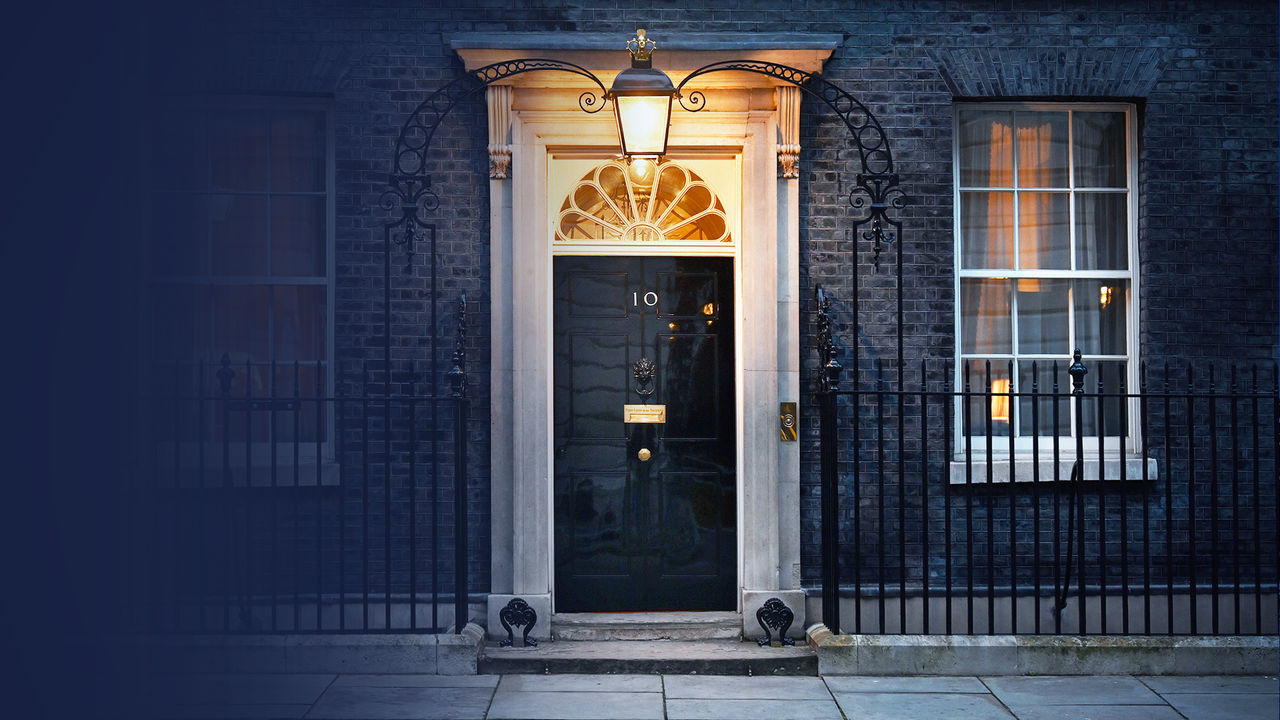
We have rehearsed on many occasions the multitude of unforced errors of Keir Starmer’s government. The epithet of the Loveless Landslide as an accurate reflection of Labour’s fortunes being demolished by the shortcomings of its own leadership is all too obvious. As its first calendar year in office closes, the mood music in the parliamentary Labour party is mutinous; sedition is increasingly open; “colleagues” are making few secrets of being on manoeuvres to replace Starmer and Reeves in the event of a coup. Even disgraced Angela Rayner, banished to the back benches for her tax miscalculations and elasticity with the truth, is being feted as a potential contender; simultaneously she is being shamelessly wooed by Starmer to make a come-back to the Front Bench as a mitigant against any Left-wing plots. The 2026 May local elections are Labour and Starmer’s trial by ordeal; his political life is hanging by a very frayed thread. If he is pushed, his replacement will be the seventh occupant in No 10 since the Brexit referendum, the tenth anniversary of which falls next June. No wonder bond markets place a premium on political risk when pricing UK government debt.
Economically, the government ends the year firmly on the back foot: militant junior doctors, whom Labour thought bought off with a large pay rise in July 2024, are striking again, for political leverage deliberately choosing the peak annual flu season which itself has caught the NHS unawares; it has been publicly roasted by the OBR about the long-term debt spiral; there is a return to negative growth; unemployment is breaking the 5% level and a point higher than when Labour took office (aside from the pandemic spike, the highest since August 2016). Straws for the government to clutch but only because of zero economic growth: a slightly lower than expected inflation rate and a December quarter point cut in base rates to 3.75% from the Bank of England.
As the Labour D-Ream election anthem went in 1997 ahead of Tony Blair’s stunning victory, and Starmer must be praying happens for very different reasons and in very different circumstances, “Things can only get better”.
Europe: “Who am I? What am I? Am I here at all?”
More broadly, Europe is adrift in a global tidal race dominated by the United States and China. The leaderships in both Washington and Beijing largely deride their European counterparts. Contempt, whether undisguised or thinly veiled, oozes from both. In many of Europe’s capitals the stock answer to the Bloc’s relative decline is “More Europe!” which only alienates national governments from their electorates; just look at Germany and France.
By subterfuge, the UK is following the reunification path in “resetting” its post-Brexit relations with the EU. This is through a selective but quickly broadening series of initiatives known as “dynamic alignment”. Dynamic alignment is a deceit to democracy: in the areas selected, conformity with EU legislation is compulsory but without full membership and voting rights, representation in policymaking or policy change is absent. Without the electorate being told or having a say, control of our own destiny is inexorably eroded. On top of several initiatives including the Youth Mobility Scheme, the latest is the UK rejoining the higher education Erasmus student exchange programme. Whatever the mild official protestations to the contrary, Deputy Prime Minister David Lammy laid bare the medium term ambition to rejoin the Customs Union under which we would cede all aspects of trade and its supporting legislation to Brussels; undermining Starmer’s public “we will not re-join” position on Brexit, 13 Labour MPs were among 100 in total backing a successful LibDem-sponsored vote to rejoin the Customs Union.
As we go to press, the French parliament has passed the new social security budget for 2026. Shorn of all hope of benefits and pensions reform so badly needed to inject fiscal prudence into France’s abject finances, the agreed 2026 fiscal deficit is expected to be 5.3% of GDP. It is far removed from the 4.7% proposed as the target to the European Commission, and breaks Prime Minister Lecornu’s pledge to deliver a deficit no greater than 5% of GDP. The neutered policy is the price of being allowed to stay in office and maintaining a semblance of a functioning government.
The Black Elephant stalking the plains
Finally, geostrategic considerations. The Russo-Ukrainian ceasefire talks are going to the wire, defined by Trump’s ultimatum of “sign by Christmas or I’m off”. Is he bluffing? It has been called before. Zelensky is still just about in the game with a new €90 billion, two-year financial lifeline from the EU, €40 billion short of what he absolutely needed and €110 billion less than he wanted. He will be back for more.
As far back as 2020, two years before the invasion, Russia’s intentions towards Ukraine were clear. The invasion itself was termed a “Black Elephant” event: it was foreseeable but was discounted and ignored by investors (in contrast to a “Black Swan”, an event nobody could reasonably foresee e.g. the Pandemic). The war has been though many stages reflecting the changing perspectives and agendas of the different personalities as they have come and gone (Putin and Zelensky have been enduring; of all the main NATO leaders involved, the only constant from invasion day to now is France’s President Macron), the end if and when it is achieved has the ability to define the security or vulnerability of Europe at least for a decade.
But another Black Elephant is now in clear sight: China is explicitly intent on the recovery of Taiwan. In less than a fortnight when it will already be January, we will be looking at 2027 as “next year”: 2027 is the year by when General Secretary Xi demands the Chinese military must be ready to invade Taiwan. China’s intent, Trump’s National Security Strategy, the extent of allied unity or disharmony about how a settlement is reached in Ukraine and its shape, will between them determine how China weighs the options for that strategic recovery of Taiwan. At the epicentre of the global semiconductor market with all its major ramifications, Taiwan matters. Markets are currently assuming an invasion will not happen because in their eyes it is irrational. It was exactly that flawed logic which led them to the wrong conclusion in 2022. Who wants to bet in favour of it not happening for a second time? Give it some thought over the holidays.
Parting shot
It could only be the incomparable Matt, the Daily Telegraph’s pocket cartoonist. From the White House press-room podium, the press secretary is giving a briefing about Ukraine: “Under the President’s peace plan Ukraine would get security guarantees and Putin would be given the BBC”. Genius.
On which cheerful note, we wish all our readers a very happy Christmas.
The Jupiter Merlin Portfolios are long-term investments; they are certainly not immune from market volatility, but they are expected to be less volatile over time, commensurate with the risk tolerance of each. With liquidity uppermost in our mind, we seek to invest in funds run by experienced managers with a blend of styles but who share our core philosophy of trying to capture good performance in buoyant markets while minimising as far as possible the risk of losses in more challenging conditions.







The value of active minds: independent thinking
A key feature of Jupiter’s investment approach is that we eschew the adoption of a house view, instead preferring to allow our specialist fund managers to formulate their own opinions on their asset class. As a result, it should be noted that any views expressed – including on matters relating to environmental, social and governance considerations – are those of the author(s), and may differ from views held by other Jupiter investment professionals.
Fund specific risks
The NURS Key Investor Information Document, Supplementary Information Document and Scheme Particulars are available from Jupiter on request. The Jupiter Merlin Conservative Portfolio can invest more than 35% of its value in securities issued or guaranteed by an EEA state. The Jupiter Merlin Income, Jupiter Merlin Balanced and Jupiter Merlin Conservative Portfolios’ expenses are charged to capital, which can reduce the potential for capital growth.
Important information
This document is for informational purposes only and is not investment advice. We recommend you discuss any investment decisions with a financial adviser, particularly if you are unsure whether an investment is suitable. Jupiter is unable to provide investment advice. Past performance is no guide to the future. Market and exchange rate movements can cause the value of an investment to fall as well as rise, and you may get back less than originally invested. The views expressed are those of the authors at the time of writing are not necessarily those of Jupiter as a whole and may be subject to change. This is particularly true during periods of rapidly changing market circumstances. For definitions please see the glossary at jupiteram.com. Every effort is made to ensure the accuracy of any information provided but no assurances or warranties are given. Company examples are for illustrative purposes only and not a recommendation to buy or sell. Jupiter Unit Trust Managers Limited (JUTM) and Jupiter Asset Management Limited (JAM), registered address: The Zig Zag Building, 70 Victoria Street, London, SW1E 6SQ are authorised and regulated by the Financial Conduct Authority. No part of this document may be reproduced in any manner without the prior permission of JUTM or JAM.