
Prefer audio? Listen to the recorded version below.
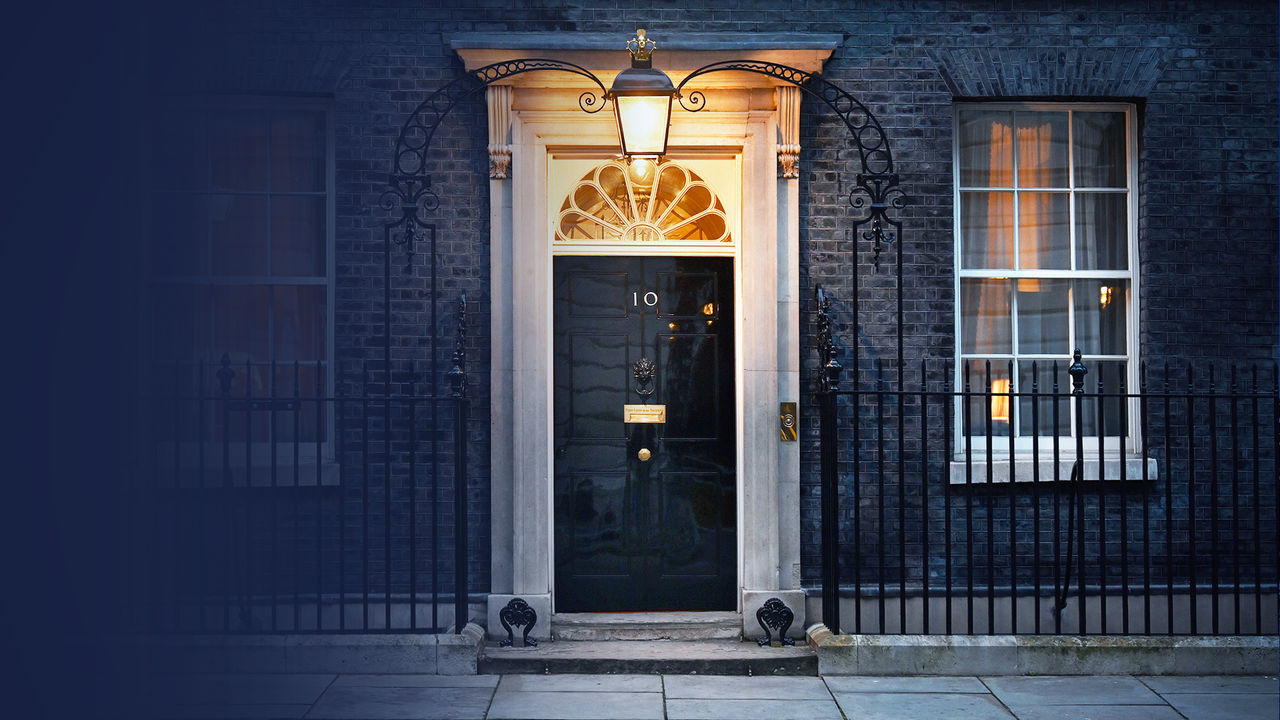
So this is what Sir Keir Starmer’s “Reversing the years of Tory Chaos”, “Change”, “Rebuilding trust in politics” and the “grown-ups are back in charge” all look like. Scandal threatens to consume Starmer, his chief-of-staff and quite possibly anyone else likely to be fingered through association with Peter Mandelson.
This is one of those columns which is fun to write but which may be out of date almost as soon as it’s published, such is the speed with which events are unfolding. Anyway, let’s give it a shot and see where we get to.
Never much loved by his party despite delivering a 174-seat landslide victory only 18 months ago, Starmer’s administration and his own personal leadership were both already in deep water. A 34% share of the polls and a clear 10-point lead over the Tories immediately ahead of the election have been slashed to a 19% share and a 10-point deficit against Reform, even before this week’s events. So out of step with his backbenchers on virtually every aspect of policy, his government has averaged a simple arithmetic mean of a U-turn a month since taking office. Now with his judgement being shown to be potentially politically fatally flawed in appointing Mandelson as the UK’s Ambassador to the United States (re-reading much press comment at the time of his appointment, most of the concerns about his suitability related to the peer’s consultancy work for a number of Chinese companies and his being a former EU Trade Commissioner, and relatively little attention was paid to his history of enforced resignations – his nickname being the ``Prince of Darkness’’, his friendships etc), support among Labour MPs is seemingly melting away. Bypassing the Foreign Office entirely to make a political rather than diplomatic appointment is the Prime Minister’s prerogative. But even leaving aside the fact of it being Mandelson, surely Starmer must have been aware of the consequences amid many sharp intakes of breath and much indignant ruffling of feathers from the Whitehall machine of this departure from protocol.
The Starmer speculation game 1: “What if he stays?”
Despite all the appearances to the contrary, particularly in the case of the Conservatives who, prone to casual political regicide have a history of being anything but conservative with their own leaders, it is a big step to defenestrate a sitting prime minister with the home team doing the shoving. What goes through the mind of any MP on the government side faced with a potential political P45 at the next election? The instinct for self-survival can still prove terminal whatever route they take, whether it be supportive or seditious. During the Tory years of a prime ministerial revolving door, Labour was keen to accuse every newly appointed incumbent of having neither authority nor a mandate. Practising the same would open themselves up to the charge of being charlatans and hypocrites.
Despite all the Westminster froth and fury and the appalling media headlines, what if Starmer survives as PM? His outlook remains bleak. His authority had already been severely diminished, on a downhill slide beginning from the very moment Rachel Reeves uttered the words “I propose to abolish the Winter Fuel Allowance”. That was as far back as her first Budget in October 2024. Tainted by the persistent charges of weakness and bad judgement against him, there is every possibility of his cabinet becoming both factional and dysfunctional.
Drawing analogies with France, one school of thought might say even if paralysis were the result, it’s not such a poor outcome: at least no greater damage can be inflicted by more bad policy. The other school would say that in perpetuating a decade-long run of political upheaval and instability (were Starmer to go, his successor would be the UK’s 7th prime minister since the Brexit Referendum 10 years ago), the country is ungovernable (in reality, as in France, the country remains functional if directionless despite the political class being dysfunctional; erosion of the national fabric is gradual). That adds to the risk premium and the cost of capital for government debt over our peers. Competing for capital, a political vacuum and lack of strategic direction make foreign inward investment much more difficult to attract when there are much simpler, less risky destinations available for overseas investors.
Speculation game 2: “What if he goes?”
What if Starmer either resigns of his own volition or is forced out in a vote of no confidence? If it’s not the current scandal that does for him, his next brush with political Nemesis was always likely to be this May’s local elections (the ones that are still happening despite around 4 million voters being disenfranchised by opportunistic postponements almost entirely accounted for by Labour authorities).
Who might replace him? The Mandelson Affair must surely have extinguished any hope for a revival of the Blairite New Labour, right-wing of the Labour Party; regardless of its historic success, it is now toxic. Mandelson was the architect of New Labour, the eponymous Tony Blair its leader tarnished by the Iraqi WMD “dodgy dossier”. Health Secretary Wes Streeting is the centre-right torchbearer. While not counted out, it remains speculation that he was being given either advice or mentoring by Mandelson which may taint him by association. It’s a shame: he is one of the more capable on the government benches.
Anyone else of consequence, and who has a record of being actively on manoeuvres or not hiding their leadership ambitions under a bushel, comes from the Left of the Party. Andy Burnham? Having been excluded by the Party’s National Executive Committee from standing in the upcoming Denton & Gorton by-election in Greater Manchester to gain a Westminster seat, and with the lists now closed ahead of the poll on 26 February, Burnham has surely missed the bus. His only route to Number 10 in this parliament is riddled with “ifs”: if Starmer stays in the immediate future and if another by-election opportunity presents itself, if Burnham manages to be selected as a candidate and if that constituency electorate wants him as an MP, then he still might get the top job if he succeeds in a leadership contest. That must be at least three “ifs” too many.
Rayner, Miliband, Lammy?
Angela Rayner? It was nothing short of a parody that it was the holier-than-thou Rayner twisting the political knife in Starmer’s ribs this week, as the more lurid headlines described it, insisting that there must be full disclosure of everything the government knew of Mandelson’s background and association with Epstein before his appointment to Washington. It is only five months since Rayner herself was forced to resign over a significant error of judgement concerning her personal tax affairs, failing to come clean about them afterwards and falsely blaming her professional advisers for bad advice. Are memories so short? But she remains the darling of the Left, popular with back-benchers and the unions, she is ambitious and a consummate politician with a robust constitution.
Then there’s Ed Miliband. Regular readers of these columns will be entirely familiar with Miliband’s zealotry for renewables injecting instability and unreliability into the UK’s national energy security architecture. His neo-Marxist economic and fiscal manifesto cost Labour the 2015 election when he was leader. It is entirely feasible that he could become leader again, only this time with the occupancy of Downing Street thrown in automatically. Given his current cabinet portfolio as Secretary of State for Energy, it is not difficult to imagine the headlines in the right-of-centre press were he to be elected: “Last one out, turn the lights off!”. That might be applicable in every sense.
Who is left (no pun intended)? Deputy PM David Lammy, a man demonstrably out of his depth and who also publicly backed Mandelson’s ambassadorial appointment? Pat McFadden, one quarter of Starmer’s original nominated quadrumvirate central politburo which was going to drive policy? Yvette Cooper, steady, dull centre-left Blairite/Brownite survivor from a previous era? Rachel Reeves, saddled with too many pejorative nicknames, a lack of authority and hardly a safe pair of hands with the economy; shaky under fire, she is no leader. Who else? It is a depressingly dry well in an arid political landscape.
Labour’s compass pointing Left? More taxes!
Whatever the outcome, it is difficult to see anything other than a leftward shift in political emphasis, particularly in all things economic and fiscal. Whether a greater lean or a lurch remains to be seen. The Labour back-bench tide is flooding that way, particularly given the significant threat posed by Zac Polansky and his Marxist Green Party currently enjoying strong momentum.
A report this week from the influential National Institute of Economic & Social Research think-tank reckons that thanks to the cumulative frictional costs of doing business introduced by Labour (e.g. employer’s National Insurance hikes, further rises in Business Rates, the new Employment Bill etc) and the lack of business confidence and growth, exacerbated by a burgeoning welfare bill, Reeves’s planned £22bn of excess fiscal headroom planned in the November Budget has already disappeared. If that proves correct, yet more tax rises are almost certainly on the way this autumn. That will be the third Budget in a row she’s had to raid the nation’s coffers. Labour MPs rather than the Chancellor hold the whip hand over the purse strings. They are determined to refuse spending cuts to welfare and health budgets and to oppose any meaningful public sector reform across the board. The Chancellor knows she will lose a fight with the bond markets if she so much as hints at breaking her fiscal rules.
The Treasury is like a cow in a byre, confined in a very narrow stall, tethered at the neck and hobbled at the back, frustrated and straining to move but regularly beaten into submission with a big back-bench stick wielded by people who know little and care less about responsible economics. It is a position of Labour’s own making. It is a challenge for the Labour leadership whoever the occupant is of Number 10. And that’s even before we think about potential changes of direction in foreign policy, NATO and how any successor to Starmer would deal with Donald Trump.
Afterthought
Who would have imagined it possible to make Boris Johnson appear a relatively competent and saintly politician? Keir Starmer must be silently ruing the day he chose to throw big moral stones about a No.10 Covid-cake-and-Coca-Cola party from within a house made of very thin glass. The sound of shattering panes is deafening.
The Jupiter Merlin Portfolios are long-term investments; they are certainly not immune from market volatility, but they are expected to be less volatile over time, commensurate with the risk tolerance of each. With liquidity uppermost in our mind, we seek to invest in funds run by experienced managers with a blend of styles but who share our core philosophy of trying to capture good performance in buoyant markets while minimising as far as possible the risk of losses in more challenging conditions.






The value of active minds: independent thinking
A key feature of Jupiter’s investment approach is that we eschew the adoption of a house view, instead preferring to allow our specialist fund managers to formulate their own opinions on their asset class. As a result, it should be noted that any views expressed – including on matters relating to environmental, social and governance considerations – are those of the author(s), and may differ from views held by other Jupiter investment professionals.
Fund specific risks
The NURS Key Investor Information Document, Supplementary Information Document and Scheme Particulars are available from Jupiter on request. The Jupiter Merlin Conservative Portfolio can invest more than 35% of its value in securities issued or guaranteed by an EEA state. The Jupiter Merlin Income, Jupiter Merlin Balanced and Jupiter Merlin Conservative Portfolios’ expenses are charged to capital, which can reduce the potential for capital growth.
Important information
This document is for informational purposes only and is not investment advice. We recommend you discuss any investment decisions with a financial adviser, particularly if you are unsure whether an investment is suitable. Jupiter is unable to provide investment advice. Past performance is no guide to the future. Market and exchange rate movements can cause the value of an investment to fall as well as rise, and you may get back less than originally invested. The views expressed are those of the authors at the time of writing are not necessarily those of Jupiter as a whole and may be subject to change. This is particularly true during periods of rapidly changing market circumstances. For definitions please see the glossary at jupiteram.com. Every effort is made to ensure the accuracy of any information provided but no assurances or warranties are given. Company examples are for illustrative purposes only and not a recommendation to buy or sell. Jupiter Unit Trust Managers Limited (JUTM) and Jupiter Asset Management Limited (JAM), registered address: The Zig Zag Building, 70 Victoria Street, London, SW1E 6SQ are authorised and regulated by the Financial Conduct Authority. No part of this document may be reproduced in any manner without the prior permission of JUTM or JAM.