
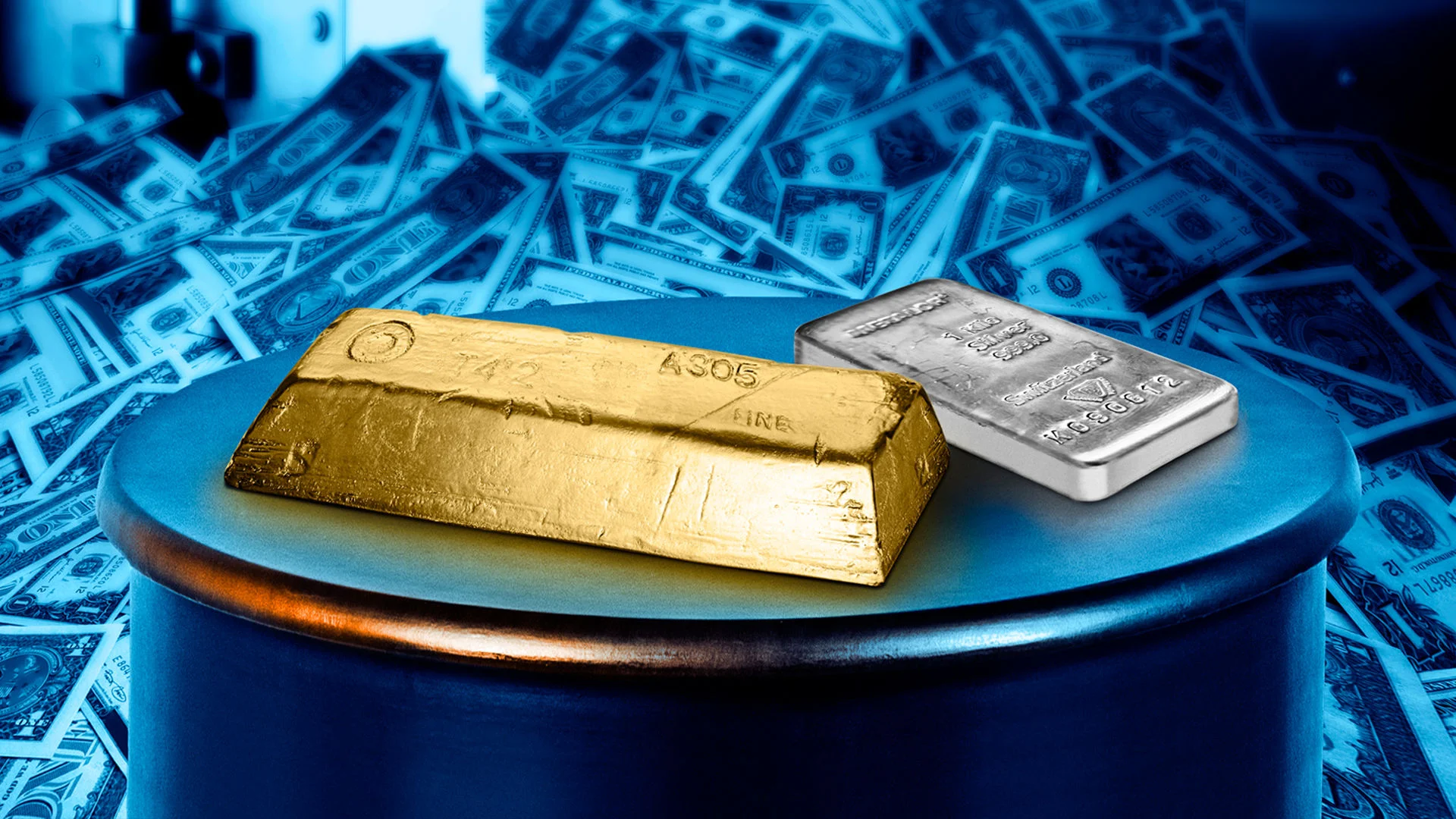
It's been a remarkable year for monetary metals. Gold and silver priced in dollars rose 65% and 148%, respectively in 2025, the largest annual returns in percentage terms for each since 1979.1 Gold and silver miner equities also advanced over the last year, and we will discuss the miners in more detail below.
These price moves came against a backdrop of easing interest rates as well as geopolitical and government policy volatility. The US Federal Reserve (Fed) cut interest rates three times last year, the dollar weakened along with real interest rates and the Trump Administration has repeatedly criticised the Fed, at times seeming to question its independence. This triggered a flight to safety in the form of monetary metals, as well as causing some jitters.
More recently, gold and silver prices fell sharply on the last trading day in January, after President Trump nominated Kevin Warsh as the next Fed chairman and the dollar rose. The decline in silver also resulted from China suspending trading in its only onshore silver futures fund, as authorities cited a desire to contain market distortions. These moves aren’t unexpected after such sharp gains, and nothing has changed our fundamental thesis of being long monetary metals and miners.
December was interesting for the monetary metals because silver started to take the lead, which is something we have expected to happen and have spoken about before. Silver is often seen as gold’s more volatile monetary metal peer, in that it tends to amplify gold’s moves on both the upside and the downside. It is a smaller market than gold, and gold tends to move first then silver follows.
Silver deficit
What makes silver particularly interesting is its persistent supply deficit – demand has exceeded supply every year since 2021, according to the Silver Institute.2 This shortage reflects growing demand for silver in industrial uses: electronics, advanced batteries, solar panels and medical technology.
More recently, we have also seen other issues around supply of the white metal, including delivery failures and China’s new restrictions on exports that began January 1.3 China is the biggest processer of silver. We have at times seen a big spread in prices in Shanghai versus Western markets.
Not in the market
I have discussed with clients and written previously that much of the increased price in gold and silver has been driven by the futures market -- leveraged capital, including global hedge funds, trading in futures. Long-only investors, asset allocators, wealth managers and their private clients haven't really participated. One way to illustrate this is that the amount of physical gold held in exchange-traded funds at the moment is below where it was five years ago, when the price of gold was $2,000 an ounce.
Investment is very trend driven, and generally there's one hot topic in markets at a time. We all know what for the last two years I has been tech and AI. It feels like gold and silver have been mostly ignored by long-only investors, although that may be beginning to change.
Another way to highlight what we view as a lack of attention to monetary metals is to look at valuations for gold and silver miners in comparison with the amount of cash they are generating. The charts below show that cash margins are rising substantially, which partly reflects the increase in value of the metals they are producing.
Gold and silver miner valuations look modest with profits on the rise
FCF Margin for Gold Miners
FCF Margin for Silver Miners
P/NAV for Gold Miners
P/NAV for Silver Miners
Yet, valuations for gold and silver miners haven’t kept pace. You would expect investors to pay more to achieve that kind of cash flow.
It is true that mining companies are complicated, risky and operationally complex businesses. Nevertheless, these companies are now doing buybacks, M&A and paying dividends and in some cases, special dividends. Valuations reflect almost a bear market for miners, which seems remarkable to us.
While we see supportive fundamentals for gold, silver and mining equities, it is important to recognise that outcomes may differ materially from expectations. Mining equities are inherently volatile and operationally complex, and valuations can remain depressed for extended periods despite improving cash flows. Silver’s growing industrial demand also makes it more cyclical and sensitive to changes in economic conditions and investor sentiment. More broadly, price performance in monetary metals and related equities depends not only on physical supply and demand but also on capital flows, market confidence and macroeconomic developments, all of which can change quickly.
Nevertheless, our view is that gold and silver are supported by a continuing favourable macro backdrop, and most investors have little or no exposure to monetary metals. Silver is a tight market which has been in a structural deficit for the last four years. The profitability of gold and silver miners is rising and yet the valuations don’t reflect the fundamentals, in our view. We would expect that the market will catch on eventually.
Strategy risks
- Sector concentration risk - the strategy’s investments are concentrated in natural resource companies, and may be subject to a greater degree of risk and volatility than a strategy following a more diversified strategy. Silver tends to outperform gold in a rising gold price environment, and it tends to underperform gold when sentiment moves against the sector.
- Smaller companies risk - smaller companies are subject to greater risk and reward potential. Investments may be volatile or difficult to buy or sell.
- Company shares (i.e. equities) risk - the value of Company shares (i.e. equities) and similar investments may go down as well as up in response to the performance of individual companies and can be affected by daily stock market movements and general market conditions.
- Currency risk - the strategy can be exposed to different currencies. The value of your shares may rise and fall because of exchange rate movements.
- Derivative risk - the strategy may use derivatives to generate returns as well as to reduce costs and/or the overall risk of the strategy. Using derivatives can involve a higher level of risk. A small movement in the price of an underlying investment may result in a disproportionately large movement in the price of the derivative investment. Derivatives also involve counterparty risk where the institutions acting as counterparty to derivatives may not meet their contractual obligations.
- Concentration risk (number of investments) - the strategy may at times hold a smaller number of investments, and therefore a fall in the value of a single investment may have a greater impact on the strategy’s value than if it held a larger number of investments.
- Strategy risk - the strategy invests in other collective investment schemes, which themselves invest in assets such as bonds, company shares, cash and currencies, it will be subject to the collective risks of these other strategies. This may include emerging markets risk and smaller companies risk.
- Liquidity risk - some investments may become hard to value or sell at a desired time and price. In extreme circumstances this may affect the strategy’s ability to meet redemption requests upon demand.
Footnotes
1Bloomberg as at 06.01.2025 Past performance does not guarantee future returns.
2SILVER SUPPLY & DEMAND - The Silver Institute
3China issues new rules on rare metal export management for 2026-27 - Global Times



The value of active minds: independent thinking
A key feature of Jupiter’s investment approach is that we eschew the adoption of a house view, instead preferring to allow our specialist fund managers to formulate their own opinions on their asset class. As a result, it should be noted that any views expressed – including on matters relating to environmental, social and governance considerations – are those of the author(s), and may differ from views held by other Jupiter investment professionals.
Important Information
This document is intended for investment professionals and is not for the use or benefit of other persons. This document is for informational purposes only and is not investment advice. Market and exchange rate movements can cause the value of an investment to fall as well as rise, and you may get back less than originally invested. The views expressed are those of the individuals mentioned at the time of writing, are not necessarily those of Jupiter as a whole, and may be subject to change. This is particularly true during periods of rapidly changing market circumstances. Every effort is made to ensure the accuracy of the information, but no assurance or warranties are given. Issued in the UK by Jupiter Asset Management Limited (JAM), registered address: The Zig Zag Building, 70 Victoria Street, London, SW1E 6SQ is authorised and regulated by the Financial Conduct Authority. Issued in the EU by Jupiter Asset Management International S.A. (JAMI), registered address: 5, Rue Heienhaff, Senningerberg L-1736, Luxembourg which is authorised and regulated by the Commission de Surveillance du Secteur Financier. No part of this document may be reproduced in any manner without the prior permission of JAM/JAMI.